
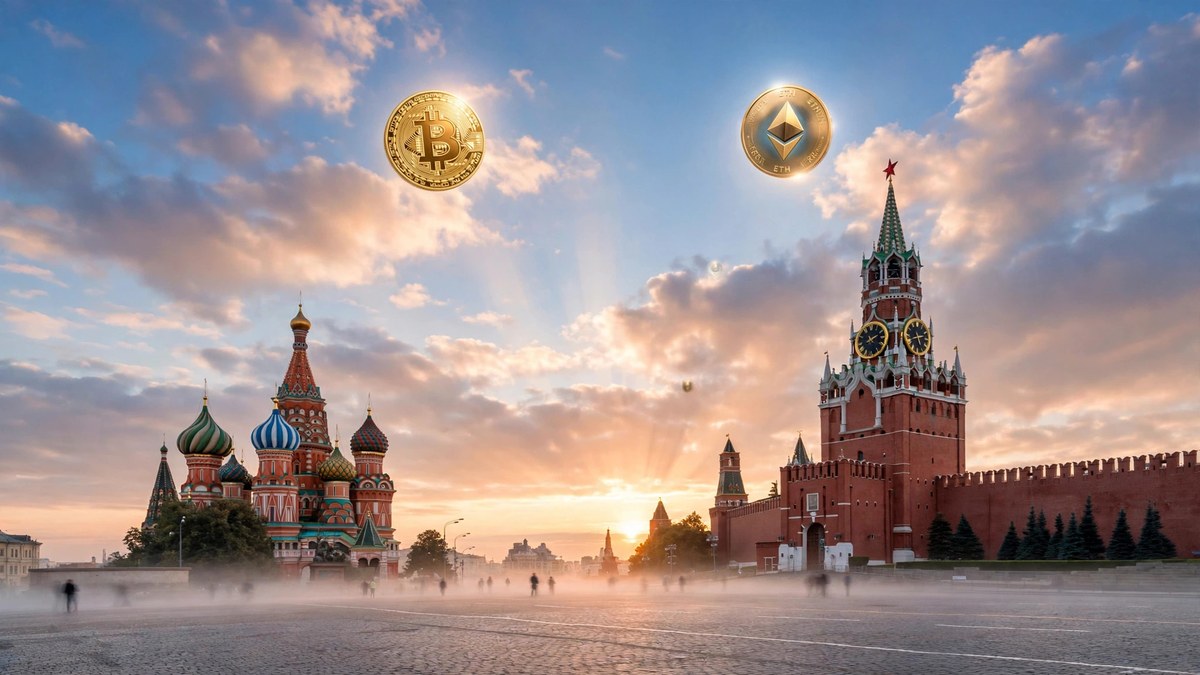
While the United States was busy cutting an exchange off from its banks this week, Russia was walking in the opposite direction. The country’s central bank has officially approved Bitcoin, Ethereum and USDT trading for retail investors, starting November 17. The russia crypto retail trading november 17 opening gives ordinary Russians legal access to the three biggest crypto assets — and it’s a big deal in a country where crypto has lived in a legal grey zone for years.
Here’s the thing. Russia isn’t a small market. It’s a country of 140 million people with a long history of using crypto to move money around sanctions and capital controls. Opening retail trading there doesn’t just create new buyers — it creates a whole new legal framework for how crypto works inside one of the world’s most watched economies.
In this article
What the November 17 opening actually covers
The approval is specific: retail investors will be able to trade Bitcoin, Ethereum and USDT. That’s it — the big two plus the biggest dollar stablecoin. No long tail of altcoins, no meme coins, no experimental tokens. The central bank picked the three assets it considers established enough for ordinary people to buy, and left everything else on the shelf for now.
That narrow scope is the tell. This isn’t Russia embracing crypto as a free-for-all. It’s a controlled opening, and the control is the point. By limiting the menu to BTC, ETH and USDT, the central bank keeps the market simple, liquid, and easy to supervise — and it keeps retail investors away from the riskiest corners of the market.
The start date matters too. November 17 gives exchanges and brokers about ten days to get their systems ready, which suggests the framework was already built before the announcement. This wasn’t a surprise decision made on a Friday afternoon — it was a planned rollout, announced when the plumbing was done.
Why Russia is opening up now
The timing is geopolitical as much as financial. Russia has been pushed out of large parts of the Western financial system, and crypto has become a practical tool for trade and payments that bypass those restrictions. Legalizing retail trading is partly about bringing that activity into the open, where the state can see it, tax it, and shape it.
There’s also a domestic logic. Russians were already trading crypto — through peer-to-peer markets, offshore exchanges, and informal channels. A ban that nobody follows just pushes the activity underground, where the state gets nothing and consumers get no protection. A regulated market at least gives the central bank a window into what’s happening.
Honestly, the contrast with the West this week is hard to miss. On the same days Russia opened its doors, the US Treasury cut MEXC off from American banks and China halted a Solana event in Shanghai. The global rulebook isn’t converging — it’s splitting. One bloc is building walls, another is building doors, and crypto companies are being forced to pick which side of the split they want to operate on.
What the russia crypto retail trading november 17 opening means for the market
Don’t overstate the short-term price impact. Russian retail buying won’t move Bitcoin’s global price by itself — the flows are real but small next to the ETF market and the treasury buyers. The significance is structural, not numerical. Another large economy just gave crypto a legal home for ordinary investors, and that chips away at the idea that crypto is a fringe asset the state will eventually stamp out.
The bigger question is what comes next. If the November 17 launch goes smoothly, expect pressure to widen the menu — more coins, more products, maybe even crypto payments. If it goes badly — fraud, blowups, capital flight — expect the central bank to tighten just as fast as it opened. Either way, the rest of the world will be watching, because Russia just became a live experiment in what happens when a major country lets its people buy Bitcoin legally.
The USDT piece deserves a second look. Including the biggest dollar stablecoin in the opening isn’t an accident — it gives Russian traders a way to hold dollars on-chain without touching a bank. In a country where moving money across borders has gotten harder, a legal USDT market is arguably the most useful part of the whole package, and it’s the part most likely to see real volume first.
This article is for education only — not financial advice. Crypto is volatile, so do your own research before buying anything.


Leave a Reply