
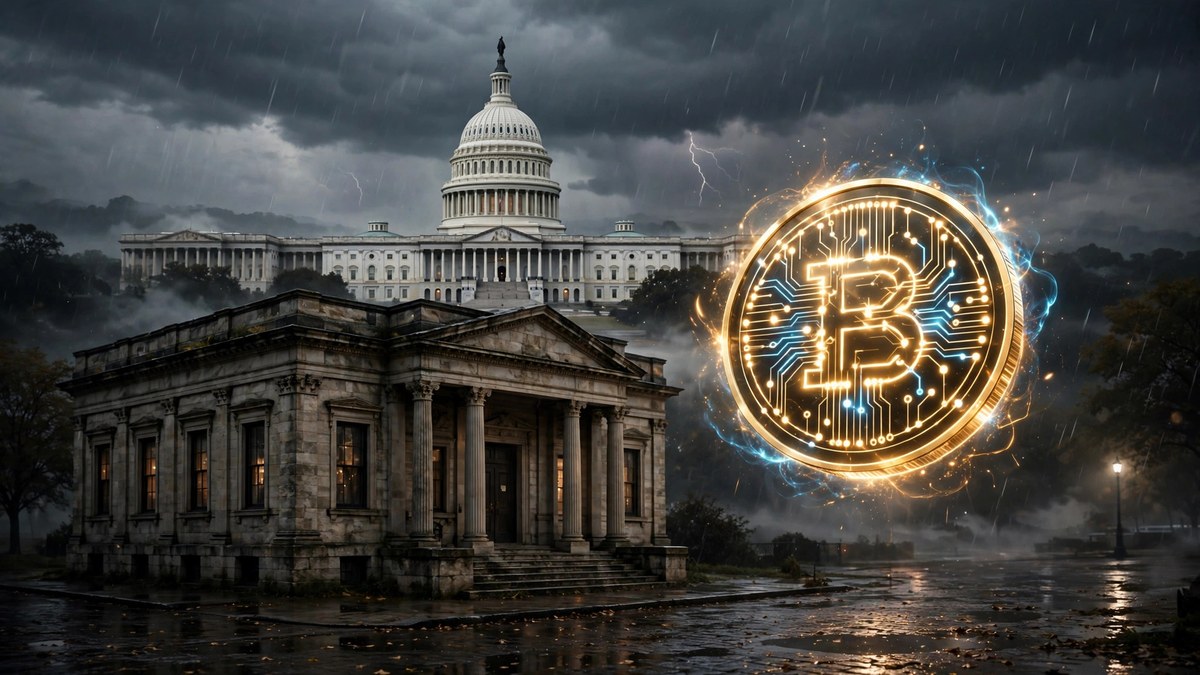
Washington is scaring crypto again — and this time the fear has a name. Gensler 2.0 fears Fed crypto bank is the argument sweeping the industry this week: after the midterm results strengthened Democratic influence in Congress, traders and builders are openly worrying that the regulatory thaw of the last two years is about to reverse, with tougher treatment for DAOs, digital-asset treasuries, memecoins and privacy coins, and slower progress on new legislation. The fear is not a policy yet.
Look, the worry has a logic to it. The last two years brought real wins for crypto: spot ETFs, clearer custody rules, and a Congress that at least talked about market-structure legislation. The midterms already stalled the CLARITY Act, and the fear now is that a tougher Congress means the next two years bring enforcement instead of legislation. Privacy coins are the most exposed — Zcash just fell below $1,000 and is down 26% in a week — and treasury companies are next in line after MSCI kicked Strategy out of its indexes. The regulatory mood and the market mood are feeding each other.
Honestly, the fear is probably overdone — but it is not baseless. Regulatory cycles in crypto have always swung with politics, and the industry has been here before: the Gensler era taught everyone that a hostile regulator with a broad mandate can freeze an entire sector without passing a single law. The ETF approvals, the custody rules and the institutional plumbing built over the last two years do not disappear because Congress gets tougher. But the pace of new progress could slow to a crawl, and for a market priced on future adoption, that matters.
In this article
Gensler 2.0 fears Fed crypto bank — the accusation from Old Glory
The second half of the story is more concrete, and more explosive. Mike Ring, co-founder, president and CEO of Old Glory Bank, has accused the Federal Reserve of blocking his bank’s crypto-integrated launch at the last minute — his claim, not an established fact, and it should be read that way. According to Ring, the bank spent eight months working with the Fed, submitted 140 pages of documentation, and was told three days before a shareholder meeting that the Fed would not approve the deal. He calls it a “hit job” by “corrupt bureaucrats” and says the Fed hates crypto because it threatens central banking.
Here is what is actually documented. Old Glory Bank had a de-SPAC deal teed up for July 2026 that would have provided $170 million in tier-one capital and taken the bank public. The Fed declined to approve the new bank holding company’s status, the merger agreement was terminated on August 13, and the Fed recorded the application as withdrawn a week later. The bank then raised more than $8 million from over 150 investors to keep going, and deposits grew from about $10 million to $270 million by June 30, 2026. The bank’s crypto product, called Next Gen Banking, was originally scheduled to launch in September. It did not.
The key detail is what the Fed actually blocked. It was not the bank itself, and it was not the crypto product directly — it was the new holding company’s status, the regulatory approval needed for the de-SPAC listing. Ring’s argument is that the Fed used a technical approval to kill a crypto bank. The Fed has not commented publicly on the claim. What is clear is that the bank is now pursuing a different path: a new capital deal expected in January that does not require Fed approval, and a direct listing of its existing holding company instead of another SPAC merger — targeting a launch in the first quarter of 2027.
What this means for crypto’s Washington fight
The products Old Glory Bank wants to launch tell you where the industry is heading, whether regulators like it or not: a dollar-backed stablecoin called OG USD, a fiat-to-blockchain swap called Glory Swap, an in-house lending platform, and QR-code onboarding to convert crypto to fiat instantly. The bank uses Ripple rails for XRP transactions, according to its own FAQ. This is not a fringe project — it is a community bank trying to offer ordinary customers the crypto services the big banks will not touch. The blue wave in Congress was supposed to bring clearer rules; instead, the industry is getting a lesson in how slowly Washington moves.
For regular holders, the honest read is that regulation is now a market-moving variable again, and it cuts both ways. A tougher Congress could slow legislation and embolden enforcement — that is the Gensler 2.0 fear. But the Old Glory story also shows the other side: banks and builders are finding ways around the roadblocks, raising private capital and restructuring deals so they do not need the approvals that were denied. The Fed can block a listing. It is much harder to block an idea whose time has come. Watch the January capital deal, watch the first-quarter launch, and watch whether Congress’s tougher mood turns into actual enforcement — or just noise.
Sources: RecodeX Pro: Old Glory Bank Raises Over $8 Million After Fed Rejects deSPAC; Threads: Old Glory Bank CEO on Fed Delay and Q1 2027 Target.
This article is for education only — not financial advice. Crypto is volatile, so do your own research before buying anything.



Leave a Reply