
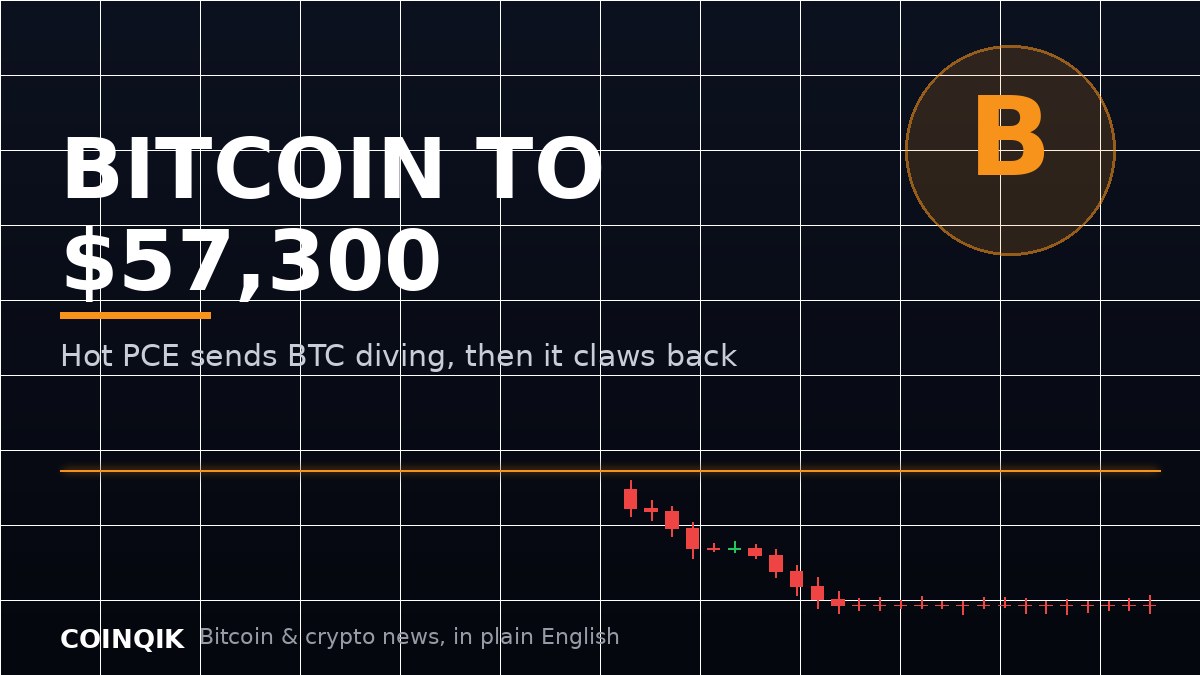
Bitcoin Plunges to $57,300 on Hot PCE Inflation, Then Claws Back Above $60,000 by Evening
Bitcoin plunges 57300 PCE. That is the story of Wednesday in one line, and it is a wild one even by November’s standards. Bitcoin woke up already under pressure, then the 8:30 AM inflation report landed hotter than traders wanted, and within minutes the price was sliding toward $57,300, its lowest since Saturday’s crash to about $55,250. For a few hours it looked like the market would give back everything from the weekend bounce. Then buyers showed up. By the evening Bitcoin had clawed its way back above $60,000, turning a day that started as a rout into one of the strangest round trips of the whole month.
The morning was brutal. Bitcoin had already closed Tuesday at $59,832, its first daily close below $60,000 since November 20, and slipped to $58,938 in Asian trading before the data came out. Then the PCE report hit, and the selling accelerated. Bitcoin fell to $57,300 early in the US session as tech stocks slid alongside it, with the day’s range stretching from $57,307.69 to $60,169.46. By the evening it had pushed back above $60,000. Same day, nearly a $3,000 swing from low to high.
Look, this is the pattern of the whole month, just compressed into a single session. Bitcoin jumps on a headline, traders pile in, and then the selling resumes because nothing underneath has actually changed. Only this time the headline was the government’s own inflation data, and it told the market exactly what it did not want to hear: prices are still rising too fast, and the Fed is now more likely to raise rates in December than to cut them.
October PCE inflation came in at 3.8% year over year, up from 3.6% in September, and core PCE hit 3.3%, the hottest reading since November 2023. The economy grew at a 4.3% annualized pace in the third quarter, the fastest in three years. Strong growth plus sticky inflation is the combination the Fed hates most, because it leaves no excuse to ease up. Traders got the message fast. December rate-hike odds jumped to almost 100% within minutes of the release, and risk assets across the board took the hit. Bitcoin just took it harder than most.
In this article
Bitcoin Plunges 57300 PCE: What the 57,300 Low Really Means
Here is the thing about $57,300. It is not just a number on a chart. It is uncomfortably close to the $55,130 low from Saturday’s flush, and it came with a warning attached. Galaxy, one of the biggest names in crypto, withdrew its call that Bitcoin’s bear market had ended, and warned that a daily close below $58,525 could signal much further declines, with historical patterns pointing toward $48,500. Bitcoin spent most of the morning below that line. The fact that it climbed back above $60,000 by the evening does not erase the warning. It just postpones the test.
Tuesday’s slide below $60,000 already showed how fragile the market is, and Wednesday proved the point again. Monday’s Nvidia-driven spike to $64,500 lasted about a day. Tuesday gave it all back. Wednesday opened with another leg down. The market keeps bouncing off the floor and then falling back through it, because every rally is built on hope rather than fresh buying. Hope is not a bid, and inflation data is not a reason to buy.
The Evening Recovery Does Not Fix the Month
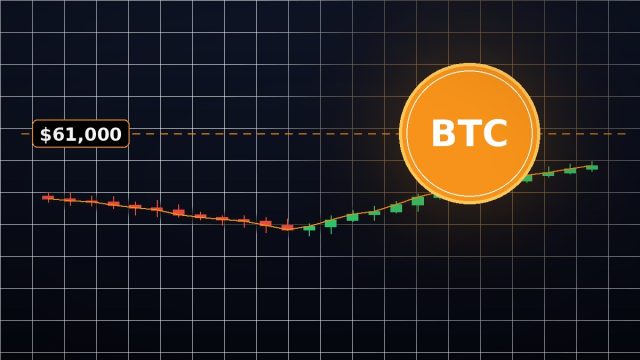
The recovery from $57,300 to above $60,000 is the kind of move that would have been a headline by itself in a calmer month. Somebody bought the dip, and they bought it hard enough to erase the whole morning’s damage. Sunday’s reclaim of $61,000 showed the same pattern: a flush, a fast bounce, and a market that refuses to stay down for long. The problem is that it also refuses to stay up. Bitcoin is down 33.89% this year and roughly 52% below its record high of about $126,000 from October 6. A one-day round trip does not change any of that.
This CoinDesk report lays out why veterans are bracing for more pain, and the mood in it is grim. Galaxy’s warning, the tariff headlines, the month-end MSCI rebalancing pressure on Strategy, and a Fed that is now talking about hikes instead of cuts. None of that goes away because Bitcoin bounced for a few hours. The bounce just means the market is volatile, not that it has bottomed.
This breakdown of Wednesday’s drop puts the PCE report at the center of it: persistent ETF withdrawals, weak buying demand, and uncertainty ahead of the data all weighed on the market before the numbers even came out. The data just gave the selling a reason and a timetable. With US markets closed on Thursday for Thanksgiving, the next real test comes Friday, when thin holiday trading can make every move bigger than it should be.
For now, Bitcoin is back above $60,000, the ETFs are still bleeding, and the market is waiting to see whether the evening recovery was a real turn or just another bounce in a market that is still looking for a floor. Wednesday gave both sides something to point at. The bears got $57,300. The bulls got the close back above $60,000. The rest of the week decides which one mattered.
This article is for education only — not financial advice. Crypto is volatile, so do your own research before buying anything.


Leave a Reply