
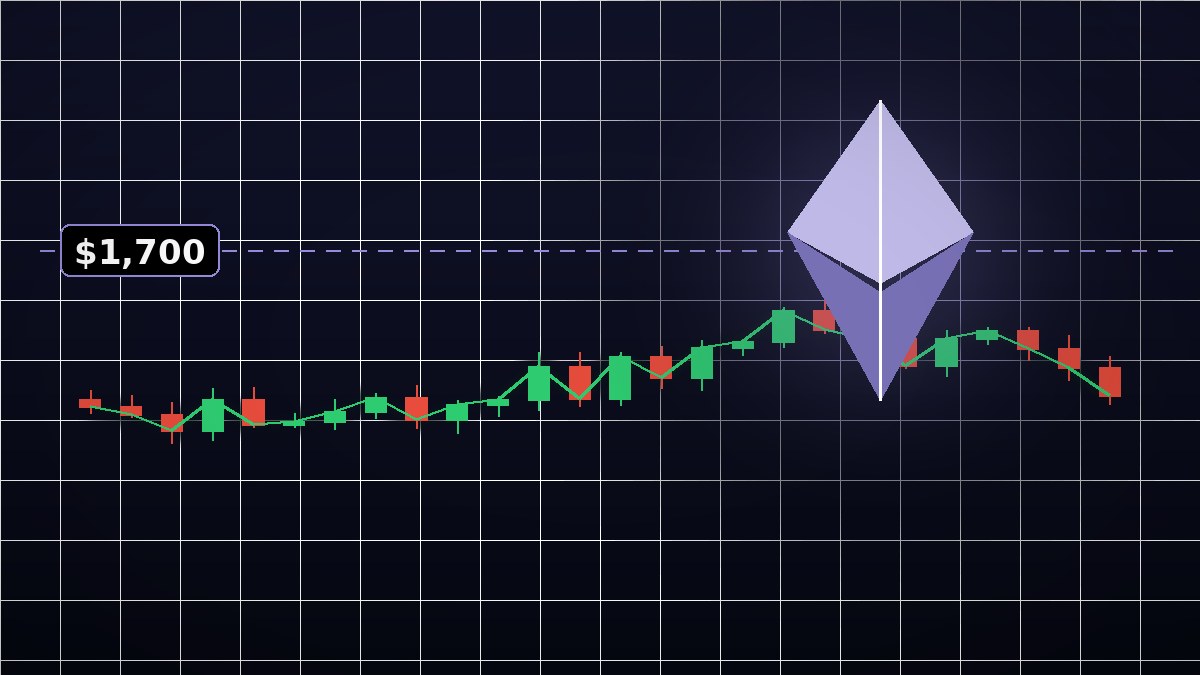
Ethereum Holds $1,700 as Developers Draft a New Gas Rule for Validator Deposits
Ethereum holds 1700 gas rule chatter aside, this weekend was really two stories in one for ETH holders. First, the price: Ethereum is trading at $1,719.76, up 2.23%, after bouncing from a Saturday low near $1,558 toward $1,695 on Saturday and pushing higher into Sunday. Second, the plumbing: Ethereum developers drafted a new gas rule for 192-byte validator deposit data, a small technical change with real implications for how the network handles the flood of staking deposits. One story is about a battered price clawing back a round number. The other is about the people who build the network quietly doing their jobs while the market panics. Both matter, and neither one cancels out the other.
Let us start with the price, because that is what most holders are watching. Ethereum rallied 6.6% to $1,664 in the broad market rebound, and the move from the $1,558 low to $1,719 is the kind of snapback that makes weekend traders feel briefly invincible. But zoom out even slightly and the picture is still grim. ETH is down 5.8% to 7.2% over the last seven days and down 29% over the last 30 days. Holding $1,700 after losing nearly a third of your value in a month is not a victory lap. It is a foothold, and a slippery one at that.
Here is the thing, though: the bounce was not an Ethereum story. It was an everything story. Bitcoin ripped back above $60,000 after touching $55,130, the whole market followed, and ETH rode the same wave. That is worth remembering before anyone declares that Ethereum has found its bottom. When the entire market bounces together, it tells you about risk appetite, not about any single coin. ETH’s real test comes on Monday, when the stock market reopens and traders decide whether the weekend rebound was a turn or just a breather.
In this article
Ethereum Holds 1700 Gas Rule: What Developers Are Actually Drafting
Now the second story, and honestly the more interesting one. Ethereum developers drafted a gas rule for 192-byte validator deposit data. If that sentence sounds like gibberish, here is the plain-English version. When someone stakes ETH to become a validator — the people who secure the network — they submit a deposit. That deposit data is 192 bytes long. The new draft sets out how much gas, which is the fee you pay to use the network, that deposit data should cost. It is the kind of unglamorous, deeply technical housekeeping that keeps a blockchain running smoothly as the number of validators grows.
That is the split screen of Ethereum right now. On one side, the price is down 29% in a month and holders are counting their losses. On the other, development grinds on exactly as it did when ETH was near its highs. The gas rule draft will not move the price on Monday. But it is the kind of work that decides whether the network is still worth something when the market eventually turns.
ETH’s Wild Weekend and the BTCS Warning Shot
There was also a reminder this weekend that the damage from the selloff is spreading beyond the charts. BTCS, a Nasdaq-listed company that holds ether, told the SEC it cannot rule out liquidation of a $54 million AAVE loan. Its shares fell 12.2% on Friday. Read that carefully: a public company that borrowed against its ether holdings is now warning regulators that the loan could be liquidated. That is what a 29% monthly drop does. It turns balance-sheet strength into balance-sheet stress, and it turns a crypto problem into a stock-market problem. Ethereum fell below $1,700 on Friday to $1,623, and that kind of slide is exactly what puts leveraged holders on the edge.
The BTCS story is a warning about leverage, and it is not just about one company. All across the market, firms and funds that borrowed to buy crypto are doing the same math this weekend. When prices fall far enough, lenders start asking questions, and the answers get uncomfortable fast. It is also worth putting this weekend in context. Ethereum spent a second straight day below $1,800 just last week, and whales bought 120,000 ETH on the dip below $1,800 — big buyers stepping in while smaller holders were heading for the exits. That is the eternal pattern of a selloff: the patient money buys what the panicked money sells. Whether those whales were early or right is a question only time answers.
So where does Ethereum go from here? The week ahead brings US markets closed Thursday for Thanksgiving and the PCE inflation data on Wednesday, with the December Fed decision looming over everything. If stocks keep sliding, crypto will almost certainly slide with them, and $1,700 will be tested again. Above, $1,800 is the first real resistance. Below, $1,558 is the line that held on Saturday. For regular holders, the boring advice is still the right advice: do not make big decisions based on a Sunday bounce. Ethereum held $1,700 this weekend. Whether it holds it next weekend is a question for Monday, and Monday has not been kind to crypto lately.
This article is for education only — not financial advice. Crypto is volatile, so do your own research before buying anything.




Leave a Reply