
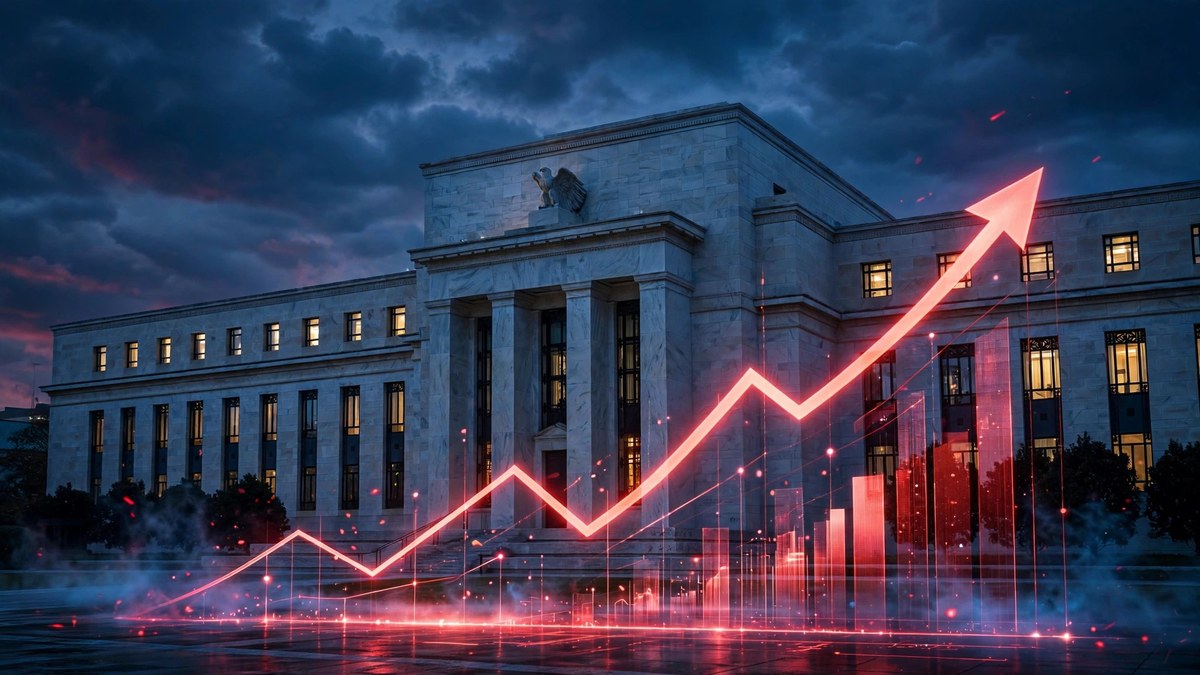
It’s basically a done deal now. The december fed hike odds cpi crypto picture flipped in a single morning: traders went from pricing a December hike as likely to pricing it as near-certain, after October CPI came in hot on both readings. CME’s FedWatch tool put a 25-basis-point hike on December 9 at 98.9% before the print even landed — and after the data, markets priced roughly 99% odds of some increase at all, with about 15% on a bigger 50-basis-point move.
The shift started hours before the CPI number, in London. Fed Governor Christopher Waller told an audience at the Bank of England Watchers Conference that he would support a 25-basis-point increase in December even if Tuesday’s inflation report came in cooler than expected. Then he went further: a 50-basis-point move “should be considered” if core CPI stayed near 0.3% or higher. Core printed exactly 0.3%. You can guess what happened next.
In this article
December Fed hike odds CPI crypto — the numbers moved in hours
Waller’s speech alone pushed hike odds from about 76% to 96%. The hot CPI print did the rest. By mid-morning, the market had a December hike priced as a near-certainty, with the federal funds target heading to 4.00–4.25% from the current 3.75–4.00%. The Fed held rates at that level on October 28 in a 10–2 vote, so the committee is clearly divided — but the market has stopped waiting for the doves to win the argument.
The bond market’s reaction was brutal. The 10-year Treasury yield crossed 5%, hitting 5.015%, and the 2-year yield jumped 21 basis points to 4.757% — its sharpest one-day rise in two years. Waller also pointed to September’s PCE data, the Fed’s preferred inflation gauge, which rose 0.5% month-over-month and 3.7% year-over-year. His words: the report was “bad” with “no silver lining.”
Even the White House sounded rattled. National Economic Council Director Kevin Hassett called the CPI report “disappointing.” Deutsche Bank now expects 25-basis-point hikes in both December and March. The market that spent the summer betting hikes were over is now betting on two more.
What a hike means for crypto
Here’s the thing: higher rates are the opposite of what crypto wants. Bitcoin doesn’t pay a yield, so every extra point on Treasuries makes holding it more expensive in opportunity-cost terms. That’s why BTC fell through $74,000 and then $73,000 on Tuesday while the Nasdaq dropped 1.1%, dragged by a 6% fall in Nvidia. Risk assets sold off together; crypto just sold off harder, the way it usually does.
The ETF complex is where the pain shows up first. US spot Bitcoin ETFs have now bled for three straight sessions, and BlackRock’s IBIT has posted seven straight days of redemptions. When institutions can earn 5% on a 10-year Treasury, the pitch for a volatile, yield-free asset gets a lot harder — and the flows prove it.
None of this means crypto is finished. It means the easy-money tailwind that carried the last two years is gone, and the market has to earn its way higher on real demand instead. HODLers who bought the “rates only go down” story are learning the other side of that trade in real time.
What to watch now
Friday’s PPI is the next data point that can move the odds — a cool print would kill the 50-basis-point talk, even if the 25-point hike stays priced. Then come the Fed’s October meeting minutes on November 18, and the December 8–9 meeting itself, the Fed’s final one of 2026. If the committee hikes 25 points and signals a pause, the market can live with that. If it hikes 50, or signals more to come, expect another leg down.
For regular crypto holders, the honest read is this: the Fed just became the whole story again. Until December 9 is behind us, every inflation print and every Fed speech moves the market — and the next one lands Friday morning at 8:30 AM ET.
Sources: Bitcoinist: Bitcoin Slips Toward $74K as Fed Hike Odds Hit 96% After Waller; Capital Street FX: Hot CPI Locks In a December Fed Hike.
This article is for education only — not financial advice. Crypto is volatile, so do your own research before buying anything.



Leave a Reply