
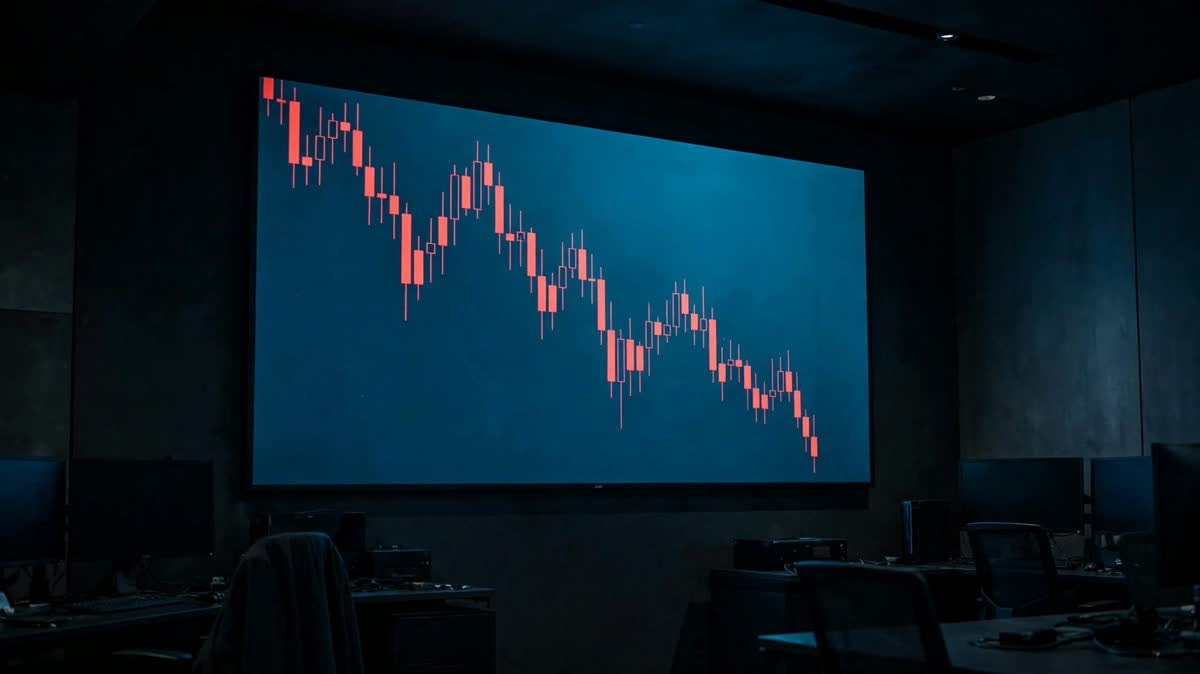
Saturday was one of those days when Bitcoin holders kept refreshing their phones. The price slipped below $80,000, touched a low near $79,263, and then steadied around $80,300. If you watched it happen live, it probably felt dramatic. If you only heard about it later, you might have wondered what all the noise was about.
Both reactions make sense. A big round number falling always gets attention, and Bitcoin has a habit of making quiet weekends loud. But a dip like this is also something Bitcoin does. It has done it before, and it will do it again. The useful question isn’t whether the price moved. It’s what the move actually tells you.
In this article
So what actually happened?
On Saturday, October 24, 2026, Bitcoin dropped below the $80,000 mark. At its lowest point it reached around $79,263. It didn’t stay there long. By the time things settled, the price was hovering near $80,300, just above the line it had crossed.
That’s the whole story, really. No single event was attached to the move. Prices in crypto often slide for a mix of reasons that are hard to pin down in the moment — some selling, some nerves, some traders taking profits. Trying to name one cause for a Saturday dip is usually a guess dressed up as an explanation.
Why does $80,000 feel like such a big deal?
Round numbers mess with our heads. Eighty thousand is a line people can picture, so crossing it feels like something changed. In reality, the difference between $80,500 and $79,500 is small in percentage terms. But our brains don’t think in percentages. They think in milestones.
It works the other way too. When Bitcoin climbs back above a round number, the headlines turn cheerful fast. The number itself didn’t change anything about Bitcoin. Nobody rewrote the code on Saturday. The network kept running exactly as before. What changed was the mood.
What does this mean if you hold Bitcoin?
Honestly? For most regular holders, a dip like this means very little on its own. If you bought Bitcoin as a long-term holding, one Saturday afternoon doesn’t change the reasons you bought it. If you bought it because you thought the price would only go up, then the dip is a reminder that it doesn’t work that way.
The people who get hurt by dips are usually the ones who bought more than they could afford to watch fall, or the ones who bought on borrowed excitement and planned to sell the moment things wobbled. A dip doesn’t create that problem. It just reveals it.
If checking the price every hour makes your stomach turn, that’s useful information about your own comfort level, not about Bitcoin. Some people handle the swings fine. Others don’t, and there’s nothing wrong with admitting that. The size of your position should match the size of your patience.
What about the people who sold?
Some people sold on Saturday. That’s their call. Selling into a dip locks in a loss, but sometimes people sell because they need the money, or because they decided their plan was wrong. Those are real reasons. Panic is also a reason, just not a very good one — and it’s hard to tell the difference while your heart is racing.
One thing worth remembering: the people who bought near $79,263 on Saturday were buying from the people who sold near $79,263. Every dip is two decisions at once. Someone’s exit is someone else’s entry.
How should you think about the next one?
There will be a next one. Bitcoin drops are part of owning it, the same way bad weather is part of living somewhere with seasons. You don’t have to like the rain to live there. You just need a roof.
A few habits help. Decide in advance how much you’re comfortable holding, and why. Write it down if you have to. When the price swings, check your plan before you check your feelings. And if a headline makes you want to do something right now, wait a day. Urgency is usually the worst advisor in the room.
Saturday’s dip was real, and it was small. Both things are true at the same time. Bitcoin fell below $80,000, touched roughly $79,263, and came back to sit near $80,300. That’s the news. Everything else is how we feel about it.
This article is for education only — not financial advice. Crypto is volatile, so do your own research before buying anything.



Leave a Reply