
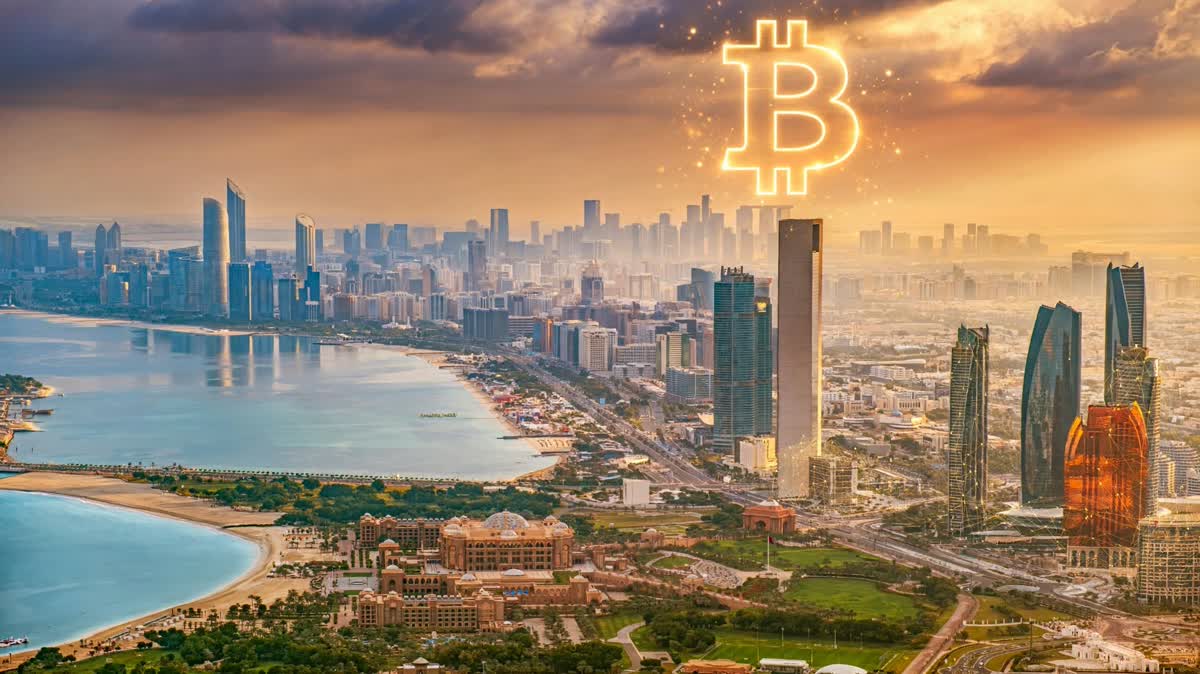
Picture a luxury hotel in Abu Dhabi. Marble floors, a rooftop pool, rooms that cost more per night than most people earn in a month. Now picture that same hotel sitting next to a pile of Bitcoin on a company’s balance sheet. That combination sounds strange. It’s also a real, $1.5 billion plan — and honestly, it’s kind of a flex.
Standard Asset Company, announced on October 27, opened its headquarters in the Abu Dhabi Global Market for an anticipated $1.5 billion strategy that pairs a bitcoin reserve with hotels and branded residences in the UAE.
Let’s unpack that slowly, because there are two ideas here — a Bitcoin reserve and tokenized real estate — and each one is confusing on its own.
In this article
The plan, in plain words
Standard Asset Company wants to build a business that holds two things: Bitcoin, and high-end property in the UAE. The hotels and branded residences generate income from guests and buyers. The Bitcoin reserve sits alongside them as a long-term store of value.
The company set up its headquarters in the Abu Dhabi Global Market, the financial free zone in the UAE’s capital. That’s a deliberate choice — Abu Dhabi has been building a reputation as a place that welcomes crypto businesses with clear rules.
The number — $1.5 billion — is the size of the strategy they anticipate, not money already spent. It’s a plan, not a receipt. Whale-sized plans still start as plans.
What is tokenized real estate?
Here’s the idea. Normally, buying a hotel means buying a whole hotel, which takes hundreds of millions of dollars. Tokenization chops ownership into small digital pieces — tokens — that live on a blockchain.
Each token represents a slice of the property. Instead of one buyer writing a giant cheque, thousands of investors can each own a small piece. The tokens can, in theory, be bought and sold more easily than a building can.
Think of it like a pizza. Nobody has to buy the whole pizza. You can buy a slice. Tokenization is the knife that cuts the pizza — and the blockchain is the receipt that proves your slice is yours.
It sounds neat, and in some ways it is. Real estate is one of the hardest things in the world to buy and sell quickly. Tokens could make it faster and open it to people who could never afford a whole building. No moonshot promises here, just a simpler way to own a piece of something big.
Why pair hotels with Bitcoin?
This is the part that puzzles people. Hotels and Bitcoin have almost nothing in common. One is concrete, staff, and room service. The other is code.
The logic, as far as anyone can tell, is balance. Hotels produce steady income but grow slowly. Bitcoin grows fast — or falls fast — but produces no income at all. Put them together and you get a business with both cash flow and a high-growth asset.
There’s also a branding angle. “Bitcoin hotels” is a story that gets attention, and attention is valuable when you’re raising $1.5 billion. A plain hotel company doesn’t make headlines. A Bitcoin hotel company does. Look, in crypto, the story is half the product.
What to watch out for
Tokenized real estate is still young. The rules change from country to country, and in some places they barely exist yet. A token that represents property in one place might not be recognized the same way somewhere else.
Liquidity is another question. Tokens are supposed to be easy to trade, but that only works if enough people want to buy them. A token for a hotel that nobody wants to trade is just as hard to sell as the hotel itself — and then you’re just a bag holder with a fancier receipt.
And the Bitcoin side brings its own risk. A company holding a large Bitcoin reserve will see its balance sheet swing with the price. A bad year for Bitcoin is a bad year for the whole plan.
If you ever see an offer like this, ask three questions:
- Who actually owns the property — you, or a company that owns the property?
- What happens to your tokens if the company goes bust?
- Can you sell your tokens easily, or are you stuck holding them?
None of that means the idea is bad. It means it’s early. The first version of most new ideas is rough around the edges.
This article is for education only — not financial advice. Crypto is volatile, so do your own research before buying anything.




Leave a Reply