
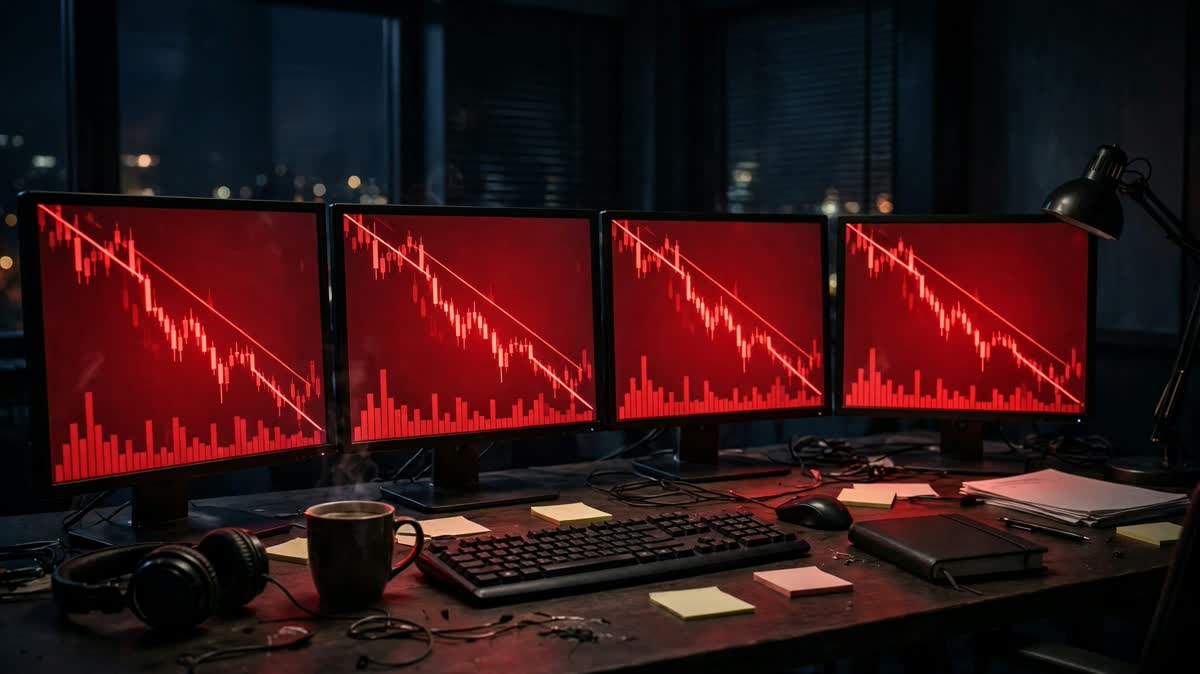
A friend messaged me during the sell-off. Three words: “I got liquidated.” He had put a few hundred dollars into a leveraged Bitcoin trade, the price moved the wrong way, and the money was just gone. Not down. Gone. One minute he was in the trade, the next he was rekt.
He isn’t alone. Around $366 million worth of crypto positions were liquidated over 24 hours around November 3, 2026, according to CoinGlass data cited by WazirX founder Nischal Shetty. Two days later, on November 5, the total hit $1.09 billion in a single day. KuCoin tracked $120 billion in crypto market value wiped out that day as top coins dropped 4 to 6 percent.
Those numbers sound abstract until you understand what a liquidation actually is. So let’s do that — in plain words, no jargon.
In this article
What liquidation actually means
A liquidation happens when you trade with borrowed money and the trade goes wrong. This is called leverage. Say you have $100. With 10x leverage, an exchange lets you trade as if you had $1,000. The extra $900 is borrowed.
Here’s the catch. If the price moves against you by just 10 percent, your original $100 is gone. The exchange closes your position automatically to make sure it gets its loan back. That forced closing is a liquidation.
You don’t get a phone call. You don’t get a second chance. The position closes, the money is gone, and all that’s left is a notification. Look, leverage will humble you fast — it doesn’t care how confident you felt when you opened the trade.
Why the numbers get so big
A billion dollars in liquidations sounds like a lot of reckless traders. In a way, it is — but it’s also how the system is built. When thousands of people use leverage at the same time, their positions all sit at similar price levels.
When the price drops to those levels, positions start closing automatically. Those forced sales push the price down further, which triggers the next batch of positions. Traders call this a cascade, and it’s why crypto crashes often look like they happen in fast, scary steps instead of a smooth slide.
November 5 was a good example. Stocks were falling hard too — the Nasdaq dropped 5.5 percent — and crypto followed. Leveraged positions that were fine on Wednesday were gone by Thursday evening. That’s the thing about degen mode: everything feels fine right up until it really, really isn’t.
There’s one more thing that makes liquidations so brutal: they happen at the worst possible moment. Prices are already falling, fear is everywhere, and the automatic selling adds fuel to the fire. A trader who might have survived a slow dip gets wiped out by a fast one.
Leverage feels free until it isn’t
Leverage is seductive because it makes small moves feel big. A 2 percent rise with 10x leverage looks like a 20 percent gain. What nobody feels in advance is that a 2 percent fall works the same way in reverse.
There are also costs most beginners miss. Leveraged positions pay funding fees to stay open, and those fees add up every few hours. The longer you hold, the more you pay — even if the price doesn’t move at all.
And then there’s the emotional part. When your position is close to liquidation, every tick of the chart feels personal. People add more money to save a losing trade, which is how a small loss turns into a big one. FOMO pulls you in, and then fear keeps you doubling down.
The part nobody tells beginners
Exchanges don’t offer leverage because they’re generous. They offer it because it makes them money — from fees, and from liquidations that keep the system running. The house is not on your side. It just rents you the chips.
That’s not a reason to never trade. It’s a reason to understand the tool before you pick it up.
- If you can’t explain what your liquidation price is, you shouldn’t open the trade.
- If losing the money would hurt your rent, your food, or your sleep, the position is too big.
- If you need the trade to work this week, you’re gambling, not investing.
My friend’s few hundred dollars taught him that lesson the expensive way. It was a cheap lesson compared to what some people pay.
The boring way that actually works
If you want exposure to Bitcoin, the boring way works: buy a little, hold it yourself, and don’t borrow to do it. It won’t make you rich overnight. It also won’t liquidate you overnight. Sometimes the least exciting play is the one that actually lets you sleep at night.
This article is for education only — not financial advice. Crypto is volatile, so do your own research before buying anything.



Leave a Reply