
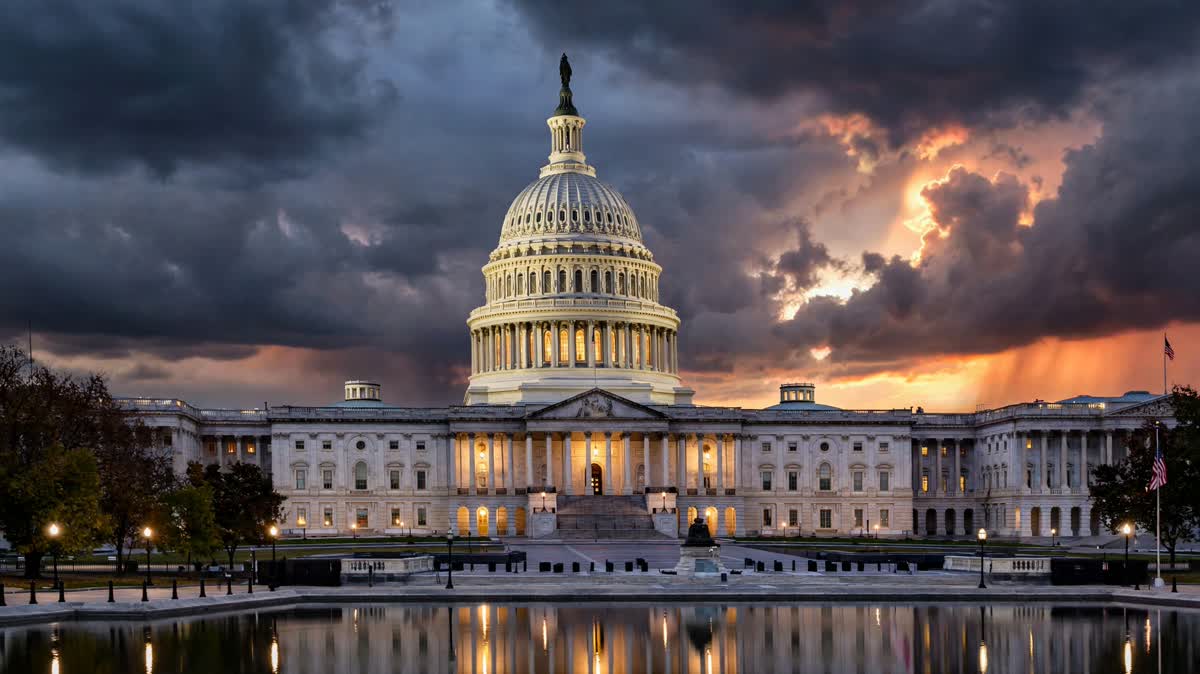
The votes are in, and Washington looks different than it did a week ago. NBC News, CBS News and the Associated Press all project the same result: after the November 3 midterms, Democrats will control both the House and the Senate.
If you hold crypto, that sentence probably made you sit up. What does a blue Congress actually change for Bitcoin, for exchanges, for the apps on your phone? Honestly, a lot could change — but almost none of it changes overnight. So take a breath.
In this article
So what actually happened?
The new majorities take office on January 3. Until then, the current Congress finishes out its term, and the lame-duck session can still pass bills. But the projections matter because they decide who writes the rules from January onward: who chairs the committees, which bills get a vote, and whose nominations get confirmed.
That last part matters more than it looks. In Congress, the majority party controls the schedule. A bill the majority does not like simply never gets a hearing. A nominee the majority does not like never gets a vote. So a flip in both chambers is not just a headline. It is a change in who gets to say yes and no.
The Banking Committee is the one to watch
For crypto, the committee that matters most is the Senate Banking Committee. That is where crypto bills live or die, and where the SEC’s leadership gets vetted. American Banker reports that Elizabeth Warren will likely chair it — and that means SEC nominees will need Democratic support to get through.
Look, Warren has been one of crypto’s toughest critics for years. She has pushed for stricter rules around money laundering, and she has argued that crypto needs the same kind of consumer protections as the rest of finance. None of that is new. What is new is the gavel. As chair, she sets the agenda: which hearings happen, which bills move, which questions get asked.
None of this means new laws appear the day she takes over. A committee chair is powerful, but a chair still needs votes. What it does mean is that the conversation changes. Proposals that might have sailed through a differently led committee will now face harder questions.
The CLARITY Act is back on the table — with edits
The bill to watch is the CLARITY Act, the big market-structure bill that has been stalled for months. Democrats are reportedly considering revisions that would expand the SEC’s authority, strengthen investor protections, and add restrictions on government officials’ crypto activities.
Here’s the thing: each of those three changes lands differently. More authority for the SEC means the agency could reach further into crypto markets — deciding which tokens count as securities, and what exchanges are allowed to list. Stronger investor protections could mean more disclosure rules for exchanges and token issuers. That is paperwork companies complain about and buyers quietly benefit from: clearer information about what you are actually buying.
The third change, restrictions on government officials holding crypto, is about conflicts of interest. It is the kind of rule that polls well and is hard to argue against in public, whatever you think of it in private.
What the industry is worried about
Industry voices warn that the new setup could complicate crypto legislation and increase scrutiny of financial privacy and illicit finance. In plain English, that means two things. First, the laws crypto companies have been waiting for may take longer to arrive, or arrive in a different shape than they hoped. Second, the privacy side of crypto — coins and tools that hide who sent what to whom — could face tougher questions than before. The degens who live on privacy tech are watching this one closely.
So what does this mean for you?
A few practical takeaways. First, nothing changes on January 3 itself. Laws take months to write, longer to pass, and longer still to take effect. Your coins do not become illegal when the calendar flips, and nobody’s bags get rekt by a date on the wall.
Second, if you use US exchanges, expect the compliance questions to keep coming. Identity checks, source-of-funds questions, withdrawal limits — the trend has been toward more of this, not less, and the election result points in the same direction.
Third, the privacy debate is coming, and it will be loud. If you care about privacy coins or mixing tools, watch what the Banking Committee schedules in its first few months. That is where the signal will be.
What to watch next
Watch the committee assignments in December, when the new chairs are named. Watch whether the CLARITY Act gets a fresh draft, and what the revisions actually say. And watch the SEC nominations — the people running the agency matter as much as the laws.
Elections change who holds the pen. They do not change the technology, and they do not change the fact that millions of Americans now own crypto. What they change is the speed and the direction of the rules. For the next few months, that is the story to follow — whether you are diamond hands or just checking prices once a week.
This article is for education only — not financial advice. Crypto is volatile, so do your own research before buying anything.




Leave a Reply